
Not Found
Digital Seminar

Why People Die by Suicide: What the Last 20 Years of Research Shows Us


Speaker:
Thomas Joiner, PhD
Duration:
1 Hour 02 Minutes
Language:
Presented in EN, subtitles in EN and FR, handouts in EN and FR
Format:
Audio and Video
Copyright:
Sep 09, 2021
Product Code:
POS058490
Media Type:
Digital Seminar

Choose a price item
Choose additional price

Description

In his theory of suicidal behavior, Thomas Joiner proposes three factors that mark those most at risk of death: the feeling of being a burden on loved ones, the sense of isolation, and, perhaps chillingly, the partly genetic and partly learned ability to hurt oneself. He tests the theory against diverse facts taken from clinical anecdotes, epidemiology, genetics, and neurobiology, with implications for the full spectrum of clinical activities related to suicidality.

Credit

Program Information

Planning Committee Disclosure - No relevant relationships

All members of the PESI, Inc. planning committee have provided disclosures of financial relationships with ineligible organizations and any relevant non-financial relationships prior to planning content for this activity. None of the committee members had relevant financial relationships with ineligible companies or other potentially biasing relationships to disclose to learners.  For speaker disclosures, please see the faculty biography.


Canada Credit - *

NOTE: Tuition includes one free CE Certificate (participant will be able to print the certificate of completion after passing the online post-test (80% passing score) and completing the evaluation). Instructional methods will include PowerPoint, didactic lecture, and others.

Continuing Education Information:  Listed below are the continuing education credit(s) currently available for this non-interactive self-study package. Program content is reviewed periodically per accrediting board rules for currency and appropriateness for credit. Credit approvals are subject to change. Please note, your licensing board dictates whether self-study is an acceptable form of continuing education, as well as which credit types are acceptable for continuing education hours. Please refer to your licensing board's rules and regulations. If your profession is not listed, please contact your licensing board to determine your continuing education requirements and check for reciprocal approval. 
For other credit inquiries not specified below, please contact info@pesi.com or 800-844-8260 before purchase.

Materials that are included in this course may include interventions and modalities that are beyond the authorized practice of your profession.  As a licensed professional, you are responsible for reviewing the scope of practice, including activities that are defined in law as beyond the boundaries of practice in accordance with and in compliance with your profession's standards.  

For Planning Committee disclosures, please see the statement above.  For speaker disclosures, please see the faculty biography.


Canada Credit - ---

Earn up to 1.0 CE hours. Please see below, for more details, as credit amounts vary by jurisdiction and profession. 


Canada Credit - Canadian Counsellors and Psychotherapists

PESI, Inc. is approved by the Canadian Counselling and Psychotherapy Association to offer continuing education for counsellors and psychotherapists. PESI, Inc. maintains responsibility for the program. This self-study activity is approved for 1.0 credit hours.


Canada Credit - Social Workers - National ASWB ACE

PESI, Inc., #1062, is approved as an ACE provider to offer social work continuing education by the Association of Social Work Boards (ASWB) Approved Continuing Education (ACE) program. Regulatory boards are the final authority on courses accepted for continuing education credit. ACE provider approval period: January 27, 2026 - January 27, 2029. Social workers completing this course receive 1.0 Clinical continuing education credits.

Course Level: Intermediate Format: Recorded asynchronous distance. Full attendance is required; no partial credits will be offered for partial attendance.


Canadian Social Workers: Canadian provinces may accept activities offered by providers approved by the ASWB ACE program for ongoing professional development.


Canada Credit - Other Professions

This self-study activity qualifies for 1.0 continuing education clock hours as required by many national and local licensing boards and professional organizations. Save your activity advertisement and certificate of completion, and contact your own board or organization for specific requirements.


US National Boards - Addiction Counselors - NAADAC

This self-study course has been approved by PESI, Inc., as a NAADAC Approved Education Provider, for educational credits. NAADAC Provider #77553. PESI, Inc. is responsible for all aspects of their programming.

This self-study course offers 1.0 continuing education contact hours in the Counseling Services skill group. Full attendance is required; no partial credit will be awarded for partial attendance.


Handouts

Speaker

Thomas Joiner, PhD's Profile

Thomas Joiner, PhD Related seminars and products


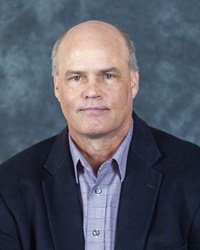
Thomas Joiner went to college at Princeton and received his Ph.D. in Clinical Psychology from the University of Texas at Austin. He is The Robert O. Lawton Distinguished Professor in the Department of Psychology at Florida State University (FSU). Dr Joiner's work is on the psychology, neurobiology, and treatment of suicidal behavior and related conditions. Author of over 750 peer-reviewed publications, Dr. Joiner is the Editor-in-Chief of the journal Suicide & Life-Threatening Behavior. Dr. Joiner has authored or edited over 18 books, including Why People Die by Suicide, Myths About Suicide, and Mindlessness: The Corruption of Mindfulness in a Culture of Narcissism. In connection with his publications, Dr. Joiner has made numerous media appearances, including the Dr. Phil show twice. Dr. Joiner has also been the recipient of many awards, recently, the 2020 James McKeen Cattell Award for lifetime contributions to the area of applied psychological research. Dr. Joiner is also a consultant to NASA's Human Research Program and the Director of a Military Suicide Research Consortium. He runs a part-time clinical and consulting practice specializing in, among other topics, suicidal behavior, including legal consultation on suits involving death by suicide.


Speaker Disclosures:
Financial: Dr. Thomas Joiner has an employment relationship with Florida State University and serves as editor in chief for Suicide & Life-Threatening Behavior and Journal of Social & Clinical Psychology. He receives royalties as a published author. Dr. Joiner receives a speaking honorarium from PESI, Inc. He has no relevant financial relationships with ineligible organizations.
Non-financial: Dr. Thomas Joiner is a member of the Society for Research in Psychopathology, the International Society for Research in Child and Adolescent Psychopathology, the Society for the Science of Clinical Psychology, the Association for Behavioral and Cognitive Therapies. He serves on several editorial boards, please contact PESI, Inc for a complete list.


Additional Info

Program Information

Access for Self-Study (Non-Interactive)

Access never expires for this product.


For a more detailed outline that includes times or durations of time, if needed, please contact cepesi@pesi.com  


Questions?

Visit our FAQ page at https://www.pesicanada.com/faq or contact us at https://www.pesicanada.com/contact-us


Objectives

  1. Evaluate anecdotal, clinical, and scientific evidence on a new theory of suicidal behavior.
  2. Appraise approaches to suicide risk assessment (utilizing risk assessment instruments) developments in the treatment of suicidal behavior, and in suicide prevention.
  3. Develop skills to understand the experience of people who are bereaved by suicide.

Outline

  • Conceptualizing and evaluating suicidal behavior from a new perspective
  • Exploration of approaches to suicide risk assessment
  • Overview of interventions for suicidal behavior
  • Investigation of research on suicide prevention
  • In-depth understanding of bereavement related to suicide
  • Overview of risk assessment screens and instruments

Target Audience

  • Counselors
  • Social Workers
  • Psychologists
  • Psychotherapists
  • Therapists
  • Marriage & Family Therapists
  • Addiction Counselors
  • Case Managers
  • Physicians
  • Nurses
  • Other Mental Health Professionals

Reviews

Satisfaction Guarantee
Your satisfaction is our goal and our guarantee. Concerns should be addressed to info@pesicanada.com.

Please wait ...

Back to Top