


Interoceptive Repair after Trauma: Neuroscience-Informed Strategies to Move Clients from Numbed Out and Overwhelmed to Emotionally Balanced
- Speaker:
- Marwa Azab, PhD
- Duration:
- 1 Hour
- Language:
- Presented in EN, subtitles in EN and FR, handouts in EN and FR
- Format:
- Audio and Video
- Copyright:
-
Feb 23, 2026
- Product Code:
- POS150681
- Media Type:
- Digital Seminar

Description
Trauma distorts the body’s internal voice. And when your traumatized clients can’t trust their body signals – whether they’re shut down and undetectable, or they’re amplified and overwhelming – therapy progress stalls and clients become vulnerable to comorbid conditions.
In this session, Dr. Marwa Azab – esteemed neuroscientist and author of the text An Update on Anxiety Disorders – will teach you strategies focused on interoceptive repair. You’ll get:
- Practical clinical tools to assess your clients’ interoceptive accuracy and confidence levels
- Strategies to support clients in describing their felt experience with precision
- Neuroscience-backed interventions to improve your clients’ sense of emotional balance
Credit
Speaker
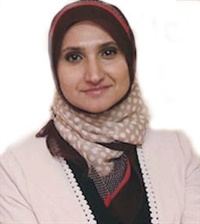
Marwa Azab, PhD Related seminars and products
Marwa Azab, PhD, teaches for the psychology department at Cal State University, Long Beach, (CSULB) and has also taught for the biology department at the University of California, Irvine (UCI). Recently, she has developed and taught curriculums on anxiety disorders and their treatments, The Tug War: Pain & Pleasure & the Science of Emotions for the Stanford University Continuing Studies Program (CSP). Marwa studied psychology for many years and completed a master’s in counseling psychology. She has facilitated many groups such as anger management, stress management, interpersonal communication, and many others for patients suffering from a variety of mental disorders. After many years of addressing human behaviors from a psychological perspective, Marwa realized that there were blind spots that needed to be satiated from complementary fields. Thus, she completed a PhD in biological sciences with emphasis on neuroscience. Dr. Azab started life coaching utilizing an interdisciplinary approach that intersects psychology, biology and genetics.
Marwa is a sought after international public speaker who is invited to speak on a variety of interdisciplinary topics, including five TEDx talks, translated to multiple languages. Her first textbook, An Update on Anxiety Disorders: Etiological, Cognitive & Neuroscientific Aspects (Springer Nature) was published in 2022. Dr. Azab has a Psychology Today blog called “Neuroscience in Everyday Life” and has been featured on ABC, NBC, and BBC News; NPR, KPCC, and KGO Radio; and in Vogue Magazine, VICE, Long Beach Post, Psychology Today, The Daily Mail, LAist, and others. She has also been elected 5x by a government agency in Southern California to be the Chair of planning a mental health conference to promote and destigmatize mental health discussions. You can connect with her on LinkedIn or her Instagram account @DrMarwaAzab.
Speaker Disclosures:
Financial: Dr. Marwa Azab has employment relationships with California State University and Stanford University. She receives royalties as a published author. Dr. Azab receives a speaking honorarium and recording royalties from PESI, Inc. She has no relevant financial relationships with ineligible organizations.
Non-financial: Dr. Marwa Azab writes a blog for Psychology Today called "Neuroscience in Everyday Life."
Additional Info
Program Information
Access for Self-Study (Non-Interactive)Access never expires for this product.
For a more detailed outline that includes times or durations of time, if needed, please contact cepepesi.com
Questions?
Visit our FAQ page at https://www.pesicanada.ca/faq or contact us at https://www.pesicanada.ca/contact-us.
Objectives
- Identify how trauma impacts interoceptive processing.
- Analyze the relationship between interoceptive disruptions and emotion precision.
- Apply at least two interventions based on modern neuroscience of interoception and emotions.
Outline
Interoception, Emotion, and Trauma
- Interoception as body summary
- Shaping of emotional experience and regulation
- Impact of trauma on interoception
- Consequences of diminished response to body cues
- Dissociation and depersonalization
- Amplification, anxiety, and hypervigilance
- Bodily sensations as trauma reminders
Interoception-Focused Trauma Treatment
- Tools to measure interoceptive ability
- How and why to improve clients’ emotional granularity
- CBT with interoceptive exposure
- Limitations of the research and potential risks
Target Audience
- Counsellors
- Social Workers
- Psychologists
- Psychiatrists
- Marriage and Family Therapists
- Addiction Counsellors
- Other Mental Health Professionals
Reviews
Satisfaction Guarantee
Your satisfaction is our goal and our guarantee. Concerns should be addressed to info@pesicanada.com.
Please wait ...